
Behind the scenes of manta ray snorkeling
What does it take to go from theater stage manager to manta ray statistician? In this episode, Savannah Maira shares her unconventional path from small-town Nevada to Hawaii's waters. As a team member at Manta Ray Advocates, she now balances customer service, data tracking, and taking guests snorkeling with the mantas - all while documenting the secret lives of individual manta rays.
Watch the episode below, watch it on YouTube for clickable chapters/timestamps - or scroll down for a full summary and additional resources.



Episode summary
Theater and ocean recreation don’t usually sit on the same resume, but for Savannah, the transition made perfect sense. She grew up in a small town in Nevada and later studied theater at Carroll College, Montana. Working as a stage manager, she learned how to keep people organized, anticipate problems, and manage complex moving parts, skills that would later translate in unexpected ways.
Hawaii had a habit of popping up in her life long before moving there was an option. During her time in Montana, she met her future husband and later discovered his family’s ties to Hawaii. Eventually, they moved to the islands together. After settling on the Big Island, an unexpected opportunity led her to an administrative role at Manta Ray Advocates, handling customer communication and operations.
That role didn’t stay limited to the office. What started as answering phones grew into helping with on-land manta briefings, followed by swim guide training and lifeguard certification. Savannah now works both behind the scenes and in the water, making a four-hour round trip across the island on weekends to guide tours. She and Martina talk about how understanding the full operation, from logistics to safety, shapes smoother and more confident experiences once guests get into the ocean.
A major part of Savannah’s work centers on data. She tracks nightly manta sightings, reviews footage, and compares observations over time, turning years of encounters into clear patterns and usable information. This long-term tracking allows the team to recognize individual mantas and answer common guest questions with real numbers instead of guesses. Savannah and Martina also share the story of Black Diamond, a manta whose fishing hook injury Savannah followed over many months, showing what careful documentation can reveal.
The conversation also covers the evolution of the Manta Rays of Kona calendar, which began as a way to help guests plan around box jellyfish days and has grown into a resource that combines timing, safety awareness, and manta stories. The episode wraps up with a glimpse of the next generation: Savannah's four-year-old daughter, Dru, who has already memorized manta anatomy from her plushie and, after seeing her first real manta from shore, declared they're "much cooler in person than on your computer, Mama."
Takeaways:
Running a successful ocean recreation business relies on organization and data just as much as smooth operations in the water
Tracking wildlife over time can reveal patterns that lead to better conservation decisions and better guest experiences
Paths into conservation and ocean work aren’t always straightforward, and skills from other fields can carry over
Good wildlife experiences depend on working within natural patterns and seasons, not trying to guarantee outcomes
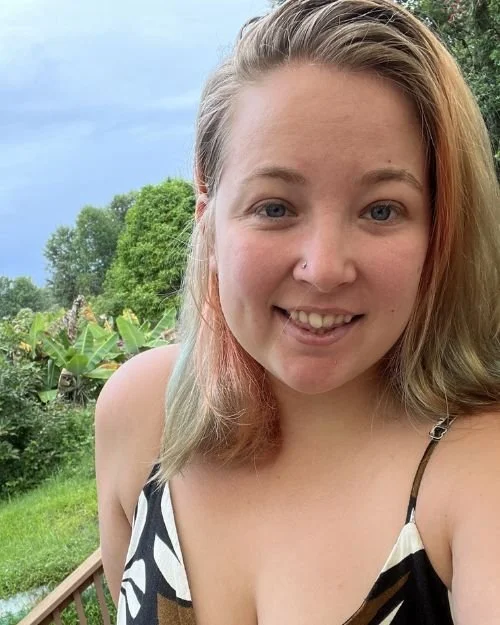
Today’s guest: Savannah Maira
Savannah grew up in sunny Nevada, but she always felt a special connection to Hawaii. After studying theater at Carroll College in Montana, she met her husband, and the two moved to the Big Island in 2019.
Today, she plays a dual role at Manta Ray Advocates, balancing office administration and operations with guiding manta ray swims.
The ocean has become her happy place, and when she’s not working, she spends most of her time with her young daughter, who’s already developing her own interest in manta rays and marine life.
Resources from this episode:
Notch, The Rescued Dolphin — Best-selling children’s book written by Martina, inspired by a real dolphin rescue
Manta Ray Library — Manta ray identification database created by the team and used to document individual mantas and long-term sightings along the west side of the Big Island
Black Diamond ID Page — The manta profile discussed in the episode, showing Black Diamond’s identification and long-term injury history
Jolene Ray Video — The breaching moment discussed in the episode
Manta Rays of Kona Calendar — Our calendar that combines box jellyfish timing with manta ray stories, and info for planning ocean activities
Moonlight Manta Swim — The guided night swim experience referenced throughout the episode
2025 manta ray tour statistics at Kauna’Oa Bay
Take action
If you’re planning a manta ray experience, take time to understand seasonal conditions, safety considerations, and the importance of choosing operators who prioritize education and long-term stewardship. Responsible wildlife encounters start with informed guests who value patience, preparation, and respect for the animals involved.